
Can an Independent Artist Get Their Music Played on Major Radio?
Updated: Oct 1
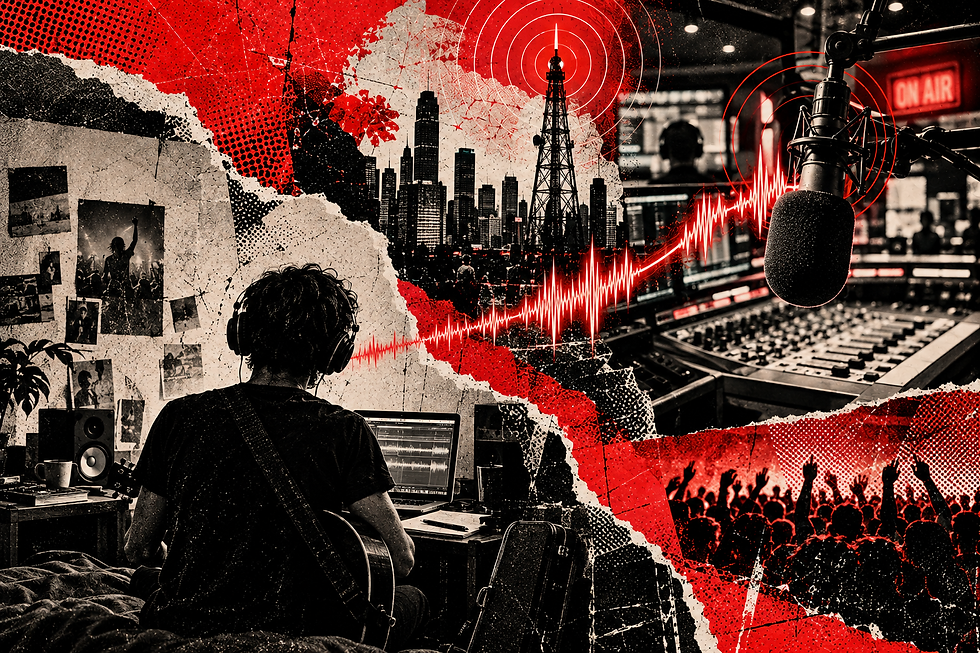
You’ve released the music yourself.
You don’t have a major label behind you.
You don’t have a huge management company.
You don’t have an enormous marketing budget.
So can you still get your music played on BBC Radio 1, Kiss, Capital Dance or other major radio stations?
Yes. You still get your music played on radio.
Being independent doesn’t automatically exclude an artist from major radio.
Radio programmers don’t have a rule saying:
“No major label, no airplay.”
What matters is whether the music is right for the station, programme and audience – and whether the people making those decisions actually get an opportunity to hear it.
That second part is where things become difficult.
Major radio receives an enormous amount of new music.
So for an independent artist, the challenge isn’t simply making a great record.
It’s getting that record in front of the right radio people, in the right way, at the right time.
Do Radio Stations Play Independent Artists?
Yes.
Independent and unsigned artists are played by radio stations every day.
The music industry has changed enormously.
Artists can now:
Record independently
Self-release
Distribute globally
Build audiences directly
Run their own labels
Promote music professionally
Develop international DJ support
A traditional major-label deal is no longer a prerequisite for releasing a professionally produced record.
And radio understands that.
What matters is whether the release is appropriate for the station.
A brilliant independent record doesn’t become less brilliant because the artist owns the master.
Can an Unsigned Artist Get Played on BBC Radio 1?
Yes.
An artist does not need to be signed to a major record label to receive support from BBC Radio 1.
But Radio 1 isn’t one single playlist controlled by one person.
It contains different programmes, presenters, producers, specialist shows and editorial teams.
That means the better question isn’t:
“How do I send my song to Radio 1?”
It’s:
“Where within Radio 1 could this particular record actually belong?”
For electronic music, specialist programming can be particularly relevant because it provides space for records that may not be intended for mainstream daytime rotation.
The challenge is identifying the right opportunity.
What About BBC Introducing?
For emerging UK artists, BBC Introducing is one of the most established routes into the BBC ecosystem.
It exists specifically to discover and support new music.
Artists can submit music through the BBC’s Introducing system, with local and specialist teams listening for new talent.
Support through BBC Introducing can potentially create opportunities for wider exposure within the BBC network.
For an independent artist, it’s therefore an obvious route worth understanding.
But it isn’t the only route.
Professional radio plugging can operate alongside artist submissions and wider promotional activity.
What Does a Radio Plugger Actually Do?
A radio plugger professionally promotes music to relevant radio contacts.
That can include:
Presenters
Producers
Specialist DJs
Music teams
Programme teams
Other relevant radio decision-makers
The key word is relevant.
A good radio plugger doesn’t simply send every release to every station.
They assess the track.
They understand where it fits.
They identify the programmes and contacts most likely to consider it.
Then they professionally present the release and follow the campaign.
In other words, radio plugging helps solve one of the independent artist’s biggest problems: access.
Can a Radio Plugger Guarantee Airplay?
No credible radio plugger should guarantee editorial airplay on a major station.
They can guarantee the promotional work.
They can present the record.
They can target appropriate contacts.
They can follow up.
They can communicate relevant information around the campaign.
But the station ultimately decides whether it plays the music.
That’s important.
If somebody offers:
“Guaranteed BBC Radio 1 play for £500”
you should be asking some serious questions.
Real editorial support has value because the station independently chose the record.
Professional promotion creates the opportunity for that choice.
It doesn’t buy the choice itself.
Do You Need a Record Label to Hire a Radio Plugger?
No.
Independent artists can hire professional radio promotion services directly.
The more important question is whether the record is ready for professional radio promotion.
That means having:
A finished master
The actual final version.
A confirmed release date
Radio promotion needs to fit within a release campaign.
Correct metadata
Artist, title, label and release information should be accurate.
Professional artwork
Presentation should be complete.
A radio edit if required
Depending on the track and target stations.
A coherent artist profile
You don’t need to be famous, but the project should look real and active.
A wider release strategy
Radio shouldn’t necessarily exist in isolation from everything else you’re doing.
Professional radio promotion can create access.
But the release still needs to be ready for that access.
Do You Need a Radio Edit?
Sometimes.
Dance music creates an obvious issue here.
If you want to get your music played on radio, the version DJs want in clubs isn’t necessarily the version most useful.
A seven-minute club mix with a two-minute intro may work perfectly in a DJ set.
It may be less appropriate for certain radio programmes.
A radio edit can provide a more concise version while preserving the essential identity of the track.
Whether one is necessary depends on:
Track length
Structure
Target station
Target programme
Genre
Campaign objectives
Specialist dance shows may be considerably more flexible than mainstream daytime programming.
Don’t automatically butcher a club record into three minutes because somebody told you all radio requires it.
But if radio is a serious objective, discuss versions before the campaign starts.
Does Your Music Need to Be Released Before Radio Will Play It?
Not necessarily.
Radio promotion frequently begins before the official release date.
This allows presenters, producers and DJs time to hear and consider the track while the wider campaign is developing.
Pre-release radio support can be particularly useful because it creates momentum around the release.
Imagine arriving at release day with:
DJ support
Specialist radio plays
Positive tastemaker support
1001Tracklists activity
The record now has a developing story.
That’s considerably stronger than releasing first and beginning every promotional conversation afterwards.
How Early Should You Send Music to Radio?
There isn’t one universal timeframe to get music played on radio.
It depends on the record, campaign and stations being targeted.
But the important principle is:
Don’t wait until release day to start thinking about radio.
Radio teams receive large quantities of music.
They need time to hear it.
Professional campaigns therefore need to be planned as part of the wider release timeline.
For many dance releases, promotional planning begins several weeks before release, with different campaign elements activated at appropriate points.
The radio strategy should be part of that planning.
Can Independent Dance Artists Get Played on Kiss?
Independent status itself isn’t what determines whether a record is relevant to Kiss or Kiss Dance.
The track needs to fit the station, programme and current musical direction.
The same principle applies throughout radio.
Don’t approach a station simply because it’s large.
Ask whether the record actually belongs there.
A specialist underground track may have much stronger opportunities through specialist programming and targeted dance radio than through a broad mainstream outlet.
Success is not simply:
“Largest station possible.”
It’s:
“Most relevant meaningful support possible.”
Can Independent Artists Get Played on Capital Dance?
Again, independent artists aren’t automatically excluded simply because they don’t have a major label.
But Capital Dance has its own programming identity and audience.
The record needs to make sense for that environment.
This is where a specialist dance music radio plugger can be particularly useful.
Someone working continuously within electronic music understands the difference between:
a specialist underground club record
and
a dance record with broader radio potential.
Those records shouldn’t necessarily receive identical campaigns.
What About BBC Radio 2?
BBC Radio 2 may seem like an unusual target in an article about dance music, but electronic artists and dance-adjacent releases can sometimes have relevance depending on the artist, record, collaborators and programme.
Again, the point isn’t to indiscriminately send everything everywhere.
It’s to understand the opportunities around the individual release.
A professional UK radio campaign can consider the wider landscape and identify where the record genuinely fits.
Is Specialist Radio Worth It?
Absolutely.
Independent artists sometimes make the mistake of thinking:
“If it isn’t Radio 1, it doesn’t matter.”
That’s far too simplistic.
Specialist radio can be enormously influential within electronic music.
A respected presenter may have:
A highly engaged genre-specific audience
Strong relationships with DJs
Industry listeners
Label contacts
Promoters following their selections
International listeners
Other tastemakers paying attention
Within niche music communities, relevance can be more valuable than raw audience size.
A specialist play can sometimes do more for an underground record than inappropriate exposure on a larger general platform.
Why Is Specialist Radio Particularly Important for Dance Music?
Because electronic music is built around specialist scenes.
Techno audiences follow Techno tastemakers.
Drum & Bass audiences follow Drum & Bass DJs.
House audiences follow House selectors.
Trance audiences follow Trance specialists.
Radio mirrors those communities.
A specialist dance presenter isn’t simply playing music.
They’re curating a scene.
Other DJs listen.
Producers listen.
Labels listen.
Fans actively search for tracks they hear.
That makes specialist radio a natural part of dance music promotion.
Should Independent Artists Target International Radio?
Potentially, yes.
One of the advantages independent artists have today is that there is no reason a release needs to remain confined to its home market.
Electronic music is inherently international.
A British producer might receive stronger radio support in:
Spain
Germany
Netherlands
Italy
France
United States
Australia
South America
Eastern Europe
Asia
The strongest market isn’t always the one you expected.
WHOA! Promo’s international radio network reaches specialist dance radio DJs and producers across more than 200 stations worldwide.
For the right release, international radio can therefore sit alongside UK promotion rather than being treated as something to consider only after domestic success.
Can International Radio Help Build an Artist?
Yes.
Radio can create several kinds of value.
Discovery
New listeners hear the artist.
Credibility
Relevant presenters independently support the release.
Territory development
Support can reveal markets where the artist is connecting.
DJ discovery
Other selectors may hear the track through specialist radio.
Campaign momentum
Radio can become part of a wider pattern of support.
For an independent artist without a huge existing audience, those signals can be particularly useful.
How Does DJ Support Help Radio Promotion?
DJ promotion and radio plugging can reinforce one another.
Imagine a new independent release begins generating support from respected DJs.
The track appears in sets.
It begins showing up on 1001Tracklists.
Specialist radio teams can see that relevant selectors are responding.
Does that guarantee radio support?
No.
But it provides context.
Likewise, a specialist radio play can expose the record to DJs who subsequently begin supporting it themselves.
The relationship can become:
DJ promotion → DJ support → radio interest → radio support → further DJ discovery.
Or it can move in the opposite direction.
That’s why a wider release strategy can be more powerful than treating radio as an isolated objective.
Does 1001Tracklists Matter for Radio?
For electronic music, it can.
1001Tracklists documents music appearing across DJ sets, festivals, radio shows, podcasts and mixes.
If an independent artist’s record begins accumulating credible support from relevant DJs, that activity becomes more visible.
This can help demonstrate that the release is moving through its scene.
Again, it’s not a magic ticket into major radio.
But it becomes part of the wider evidence surrounding the record.
A developing artist with meaningful DJ support, specialist radio activity and tracklist momentum presents a very different story from an unsolicited link with no context whatsoever.
Do Spotify Streams Matter to Radio Stations?
They can provide useful context, but there is no magic stream number that automatically unlocks radio.
A track doesn’t suddenly become eligible for BBC Radio 1 because it reached exactly 100,000 Spotify streams.
Streaming is one signal among many.
Radio teams may consider factors including:
The music itself
Artist development
Audience response
Existing support
Relevance to the programme
Current programming
Wider campaign activity
Timing
For an underground electronic record, DJ and tastemaker support may provide particularly relevant context.
For a crossover track, consumer streaming may play a larger role.
There isn’t one formula.
Do Social Media Followers Matter?
Again, they can provide context.
But a producer doesn’t need a million TikTok followers before a specialist radio presenter is allowed to like their record.
Dance music has always had room for relatively unknown producers to make records that become important within the DJ community.
A strong artist profile helps.
An engaged audience helps.
But don’t delay professional promotion indefinitely because you think you need to reach an arbitrary follower count first.
If the record is ready and the campaign makes sense, the music can begin doing some of the talking.
What Makes Radio Take an Independent Artist Seriously?
There is no single checklist, but professionalism helps enormously.
Make sure the project looks complete.
That means:
Good music
Everything begins here.
Professional production
The recording needs to stand alongside commercially released music.
Clear artist identity
Radio should be able to understand who you are.
Accurate metadata
Don’t create avoidable administrative problems.
Professional artwork
Presentation matters.
Confirmed release strategy
Know when and how the record is being released.
Relevant promotional support
DJ, radio and wider activity can help build context.
Easy access
Don’t make radio teams fight to hear or obtain the track.
Being independent doesn’t mean looking unfinished.
What Should You Send to Radio?
Keep the promotional package clear.
Typically, you want:
Artist name
Track title
Label or self-release information
Release date
Artwork
Genre
Short relevant biography
Concise release information
Private listening access
Download access
Radio edit where appropriate
Meaningful existing support where relevant
Don’t bury the track beneath three pages of adjectives.
Radio teams need to understand the release quickly.
The music should remain the centre of the pitch.
Should You Email Major Radio Stations Yourself?
You can use legitimate submission routes where available.
For emerging UK artists, BBC Introducing is an obvious example.
Direct specialist outreach may also be appropriate where a presenter or programme accepts submissions.
But mass-emailing random addresses at major broadcasters isn’t necessarily an effective radio strategy.
Professional plugging becomes valuable because the plugger already understands:
Who handles what
Which programmes are relevant
How music should be presented
When to follow up
Where a particular track realistically belongs
That’s knowledge an independent artist would otherwise need to build from scratch.
What Does UK Radio Plugging Cost?
Radio promotion prices vary considerably depending on:
Campaign duration
Number of tracks
Target stations
Level of service
Genre
UK versus international activity
Reporting
Whether radio is part of a larger campaign
Don’t choose purely on price.
Ask what the service actually includes.
And be wary of cheap services promising guaranteed major-station results.
You’re paying for professional promotion and access, not purchasing editorial decisions.
How Do You Measure a Radio Promotion Campaign?
Don’t evaluate radio purely by asking:
“Did we get Radio 1?”
Look at the wider results.
Which stations played the record?
Which presenters supported it?
Was there repeat airplay?
Did specialist radio respond?
Which territories performed strongly?
Did radio activity grow during the campaign?
Did DJ support develop alongside it?
Did 1001Tracklists activity increase?
Did streaming or audience activity change?
For an emerging independent artist, several relevant specialist radio plays may represent a meaningful step forward even without immediate national daytime rotation.
Build careers in stages.
What If Major Radio Doesn’t Play the Track?
That doesn’t automatically mean the campaign failed.
Major radio is highly selective.
A strong record can receive meaningful DJ, specialist radio and international support without landing a major national playlist.
Look at what actually happened.
Did respected DJs support it?
Did specialist radio play it?
Did new territories respond?
Did the artist gain listeners?
Did relationships develop?
Did the release perform better than the previous one?
Those are useful outcomes.
Then take what you’ve learned into the next campaign.
Music careers are rarely built around one email and one miraculous radio play.
How WHOA! Promo Helps Independent Artists Reach Radio
WHOA! Promo has specialised in dance music promotion for more than 15 years, working with independent artists, producers and record labels alongside established names across the international electronic music industry.
Campaigns can combine:
UK Dance Radio Promotion
Targeted promotion to relevant UK dance outlets including BBC Radio 1, BBC Radio 2, BBC Radio 1 Dance, Kiss, Kiss Dance and Capital Dance.
International Radio Promotion
Promotion to specialist dance radio DJs and producers across more than 200 stations worldwide.
Worldwide DJ & Tastemaker Promotion
Targeted DJ promotion through a core network of more than 9,500 opted-in Inflyte subscribers, with wider promotional reach to more than 35,000 DJs globally.
1001Tracklists & DJ Support Monitoring
Campaigns can follow documented support developing across DJ sets, festivals, radio shows, podcasts and mixes.
Integrated Campaign Reporting
Clients can monitor information including DJ support, radio activity, 1001Tracklists data and streaming statistics.
The aim is to give independent releases access to the same kind of professional promotional infrastructure used across the wider electronic music industry.
Can an Independent Artist Get Played on Major Radio?
Yes.
Independent doesn’t mean invisible.
Unsigned doesn’t mean unplayable.
And you don’t need a major label logo on the artwork before a radio presenter is allowed to love your record.
But access matters.
Timing matters.
Presentation matters.
Targeting matters.
And most importantly, the music needs to be right for the people you’re asking to support it.
Use legitimate submission routes.
Build DJ and tastemaker support.
Target specialist radio.
Consider international opportunities.
Use professional radio plugging when the campaign justifies it.
And don’t judge the entire career by whether one national station plays one release.
The goal isn’t simply to get onto radio.
It’s to build a body of credible support around an artist that gives each successive release a stronger position than the one before it.
Want to Get Your Music in Front of Major and Specialist Radio?
WHOA! Promo provides professional UK dance radio plugging, international radio promotion and worldwide DJ and tastemaker campaigns for independent artists, established producers and record labels across electronic music.
From UK outlets including BBC Radio 1, BBC Radio 1 Dance, Kiss and Capital Dance to specialist radio across more than 200 international stations, campaigns are built around the individual release and the audiences most relevant to it.
Explore WHOA! Promo’s dance music radio promotion services and give your next release the professional campaign it deserves.
You don’t need a major label to make a record worth playing. You need to make sure the right people get the chance to hear it.


